How to Spot a Heritage Home: A Buyer's Field Guide to East Hill
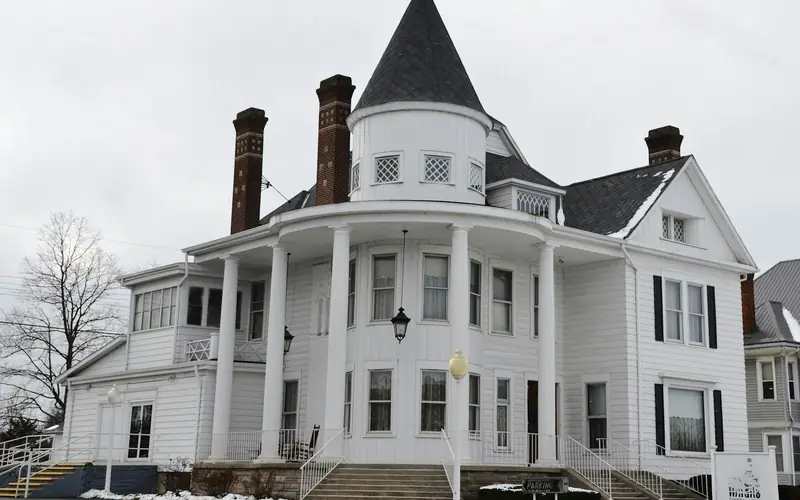
Quick answer: On East Hill, look for turrets, fish-scale shingles and wraparound verandahs (Queen Anne Revival), mansard roofs with dormers (Second Empire), symmetrical "classic box" forms with hipped roofs (Edwardian and Colonial Revival), low bungalows with tapered porch posts (Craftsman), and flat-roofed stucco (1930s Spanish Eclectic). To know whether a home is officially listed, check the City of Vernon's heritage register.
East Hill is one of Vernon's oldest neighbourhoods, and its streets are a living catalogue of building styles from the 1890s onward. Here's how to read what you're looking at, and what to ask before you buy.
Heritage register vs. heritage designation
Two terms come up often, and they aren't the same thing:
- The heritage register is the City of Vernon's list of properties with heritage value. It was adopted by Council in 2000 and most recently updated on April 9, 2026.
- Designated heritage sites are a subset protected by a municipal bylaw. The register marks these separately. A few properties also have Heritage Revitalization Agreements (HRAs), which are negotiated agreements with the City.
What each status means for renovations, permits and future plans depends on the property. Ask the City of Vernon's planning department and your lawyer before you buy. This is general information, not legal advice.
A style-by-style field guide
Queen Anne Revival (about 1890–1910)
The register says this style was popular in the Okanagan from the early 1890s to around 1910. Look for:
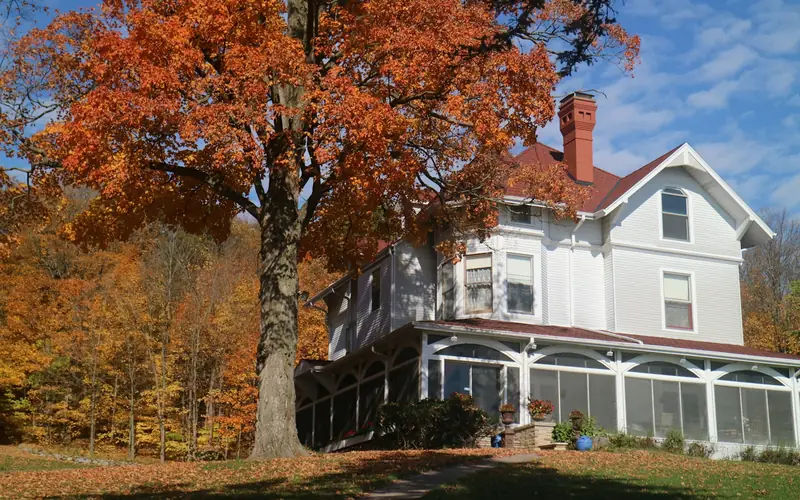
- Asymmetrical, cross-gabled shapes
- Towers or turrets, sometimes with conical roofs
- Mixed wall textures, such as rows of fish-scale shingles alternating with drop siding
- Bay windows, decorated gable ends and brackets
- Big verandahs with turned posts and railings
East Hill example: Campbell House (1898, 2203 30th Avenue), with its corner tower and conical turret at the top of 30th Avenue.
Second Empire (1890s)
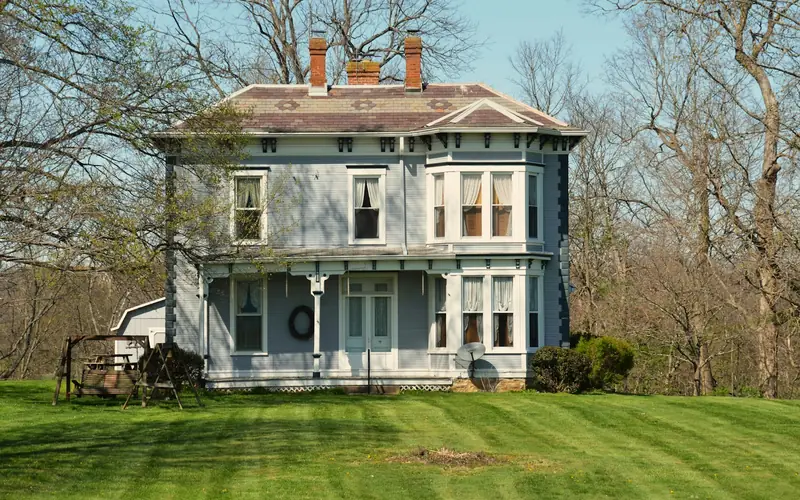
Rare in Western Canada. Look for a mansard roof, which has steep lower slopes that form almost a full upper storey, with dormer windows set into it.
East Hill example: the Mohr House (1893, 2301 32nd Avenue), described in the register as Vernon's only high-style Second Empire home.
English Arts and Crafts (1890s–1910s)
Look for hand-crafted detail, natural materials, leaded windows and a country-house feel.
East Hill example: the Spinks/Ellison House (completed 1894, 2159 36th Avenue), designed by the Vancouver firm Fripp and Wills.
Edwardian and Colonial Revival (about 1900–1915)
After the busy Victorian look, tastes turned to calmer, more classical designs. Look for:
- Symmetrical fronts
- A "classic box" shape with a hipped roof, flared eaves and hipped dormers
- Classical porch details
East Hill examples: the second Crowell House (1910, 1800 32nd Avenue), built of Vernon brick, and the Owens House (1909, 2000 37th Avenue) in the Hillhead subdivision.
Craftsman and California bungalows (1910s–1920s)
Look for low-pitched roofs, wide eaves with exposed brackets, tapered porch posts and one or one-and-a-half storeys.
East Hill example: the R. N. Clerke House (1914, 1501 35th Avenue), a large bungalow with Craftsman detail. The register lists many bungalows of this era on East Hill streets.
1930s styles: Spanish Eclectic and Moderne
Look for flat roofs, smooth stucco walls, arched openings and, in Moderne homes, curved corners. The register notes that the Galbraith brothers built side-by-side Spanish Eclectic houses on East Hill in 1937 and 1938, and it lists the Horace Foote House (1941, 3302 19th Street) as an early example of Art Moderne, with curved corners and smooth stucco.
Post-war homes
After the Second World War, the "100 homes" were built on East Hill to ease a housing shortage. They're typically modest and practical, and they're part of the neighbourhood's story too.
Clues that a house is older than it looks
- Stone or rubble foundations
- Original wood windows, sometimes with leaded or stained glass
- Tall ceilings, fir trim, plaster walls and inglenooks
- Decorative chimneys in fieldstone or brick
- Mature trees and a lot laid out on an older estate plan
What to check before you buy an older home
- Heritage status: is it on the register, designated or under an HRA?
- Inspection: hire a home inspector experienced with older homes. Pay particular attention to wiring, plumbing, foundations, drainage and the roof.
- Insurance: some older systems can affect insurability. Talk to an insurer early.
- Renovation plans: check zoning, permits and any heritage requirements with the City before you commit.
- Research: the Vernon Museum & Archives can help you learn a house's history (archives by appointment).
Our buying in East Hill page covers the buying process in more detail. For local insight, we feature Tim Jones, a fellow agent who lives in East Hill, as our local East Hill expert. Browse current listings on Tim's live East Hill MLS® search.
FAQ
How do I know if an East Hill house is on the heritage register?
Check the City of Vernon's heritage register, which lists properties by street address, or ask the City's planning department.
Does being on the register stop me from renovating?
Not necessarily, but rules depend on the property's status. Designated sites and HRA properties can have extra requirements. Confirm with the City and your lawyer before buying.
What's the oldest style on East Hill?
Many of East Hill's oldest surviving homes date to the 1890s, in Queen Anne Revival, Second Empire and Arts and Crafts styles.
Looking for a character home on East Hill? Call or text Sean at 778-363-0542, or call the Sarah AI info hotline any time at 604-227-4810.
Featured photo: stock image from Unsplash, for illustration.