A Short History of Vernon and East Hill
Quick answer: Vernon grew from the Priest's Valley settlement into the Okanagan's first incorporated city in 1892. East Hill, the slope just east of downtown, became a fashionable place for prominent citizens to build in the 1890s, filled in with new subdivisions before the First World War, and added the "100 homes" after the Second World War. That layered history is why the neighbourhood mixes Victorian landmarks, early 1900s houses and mid-century homes.
East Hill's streets tell Vernon's story in wood, brick and stone. This short history draws mainly on the City of Vernon's heritage register and its history pages, so you can see how the neighbourhood took shape.
Before the town: Syilx land and early trails
Vernon sits on the traditional territory of the Syilx (Okanagan) people, who have lived in the valley for thousands of years. The City's heritage register notes that the area was a historic winter gathering place, and that early Indigenous trails influenced how Vernon developed. Several of those irregular routes are still in use as roads today, including Pleasant Valley Road, which runs along the foot of East Hill, as well as Alexis Park Drive and Coldstream Avenue.
Many local place names come from traditional names too. Kalamalka Lake's name is loosely translated as the "Lake of Many Colours".
From Priest's Valley to Vernon
Fur traders passed through the valley from about 1811, and Oblate missionaries arrived in 1859. Luc Girouard, who came looking for gold, became the area's first non-Indigenous settler and rancher. In 1867, he pre-empted 160 acres west of Swan Lake that stretched into what is now downtown Vernon.
The settlement that grew on Girouard's and Amos Delorier's land became known as Priest's Valley. In 1885, a townsite was laid out and named Centreville. On November 1, 1887, it was renamed Vernon in honour of Forbes George Vernon, a member of the provincial legislature. Forbes and his brother Charles had acquired the Coldstream Ranch in 1864.
Railway, orchards and a new city (1890s)
By 1892, a rail branch line linked Sicamous with Okanagan Landing, and CPR boats connected Vernon with the rest of the valley. Lord and Lady Aberdeen bought the Coldstream Ranch in the early 1890s and introduced fruit orchards, starting the valley's long history as a fruit-growing region. Vernon was incorporated on December 30, 1892, as the first incorporated city in the Okanagan Valley.
East Hill's first grand homes
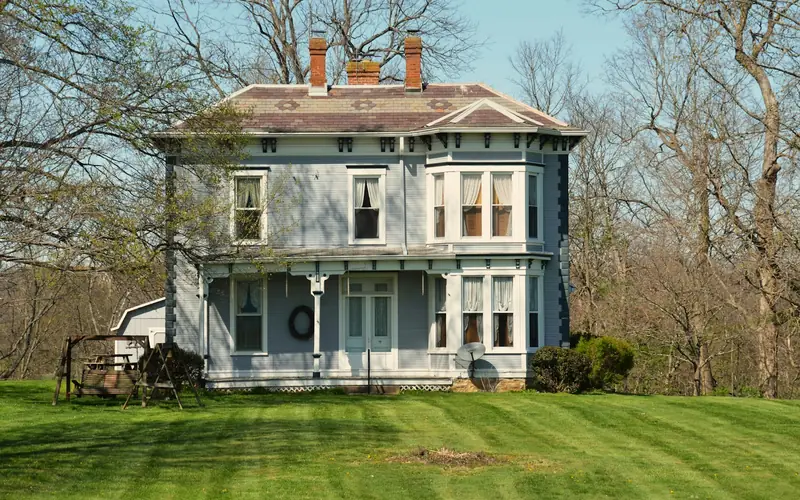
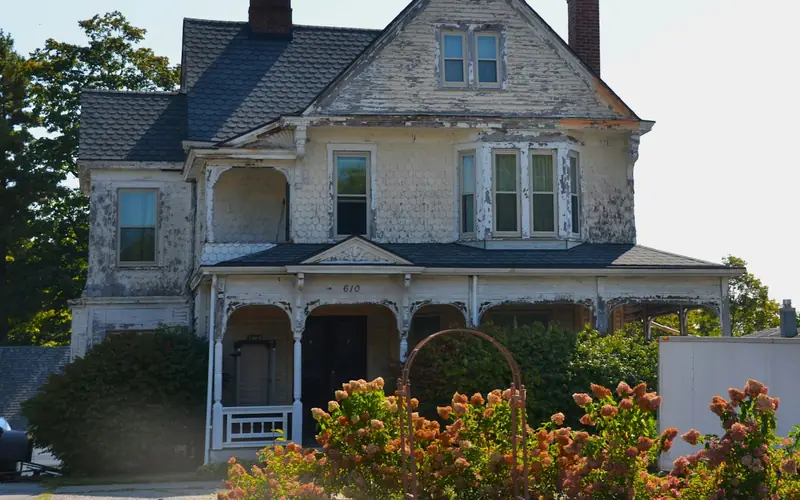
The 1890s were when East Hill first became fashionable. The heritage register notes that residential development grew on the lower East Hill, which became popular with prominent citizens such as Judge Spinks, F. Billings and W. R. Megaw. Surviving homes from this decade include:
- The Mohr House (1893, 2301 32nd Avenue), Vernon's only high-style Second Empire home.
- The McNair/Billings/Cochrane House (1893, Pleasant Valley Road), a Queen Anne design by R. B. Bell.
- The Spinks/Ellison House (completed 1894, 2159 36th Avenue), an English Arts and Crafts country house later owned by rancher and provincial cabinet minister Price Ellison.
- The Sommerville House (1895), now the Caetani Cultural Centre on Pleasant Valley Road.
- Campbell House (1898, 2203 30th Avenue), a Queen Anne Revival landmark at the top of 30th Avenue. The register notes it was one of four houses built on East Hill above Pleasant Valley Road before 1900.
Boom years (1900s to 1913)
As big ranches were subdivided, irrigation arrived. The Grey Canal, built between 1906 and 1914, carried water through Coldstream and Vernon and turned ranchland into orchards. Vernon became the economic hub of the Okanagan. Central School (now École Beairsto, on 27th Street) opened in 1909, and so did the new Vernon Jubilee Hospital.
New subdivisions spread across the upper East Hill, in Hillhead, Lakeview and Hillcrest, and across the lower East Hill in Pine Grove. Builder T. E. Crowell, whose brickyard supplied much of the town, built his own brick house near the top of East Hill in 1910 (1800 32nd Avenue). An economic downturn in 1913 brought the boom to an end.
Between the wars and after
Construction was slow through the First World War and the depression that followed. From the mid-1920s, styles shifted toward Arts and Crafts bungalows, and by the late 1920s and 1930s, Vernon saw Art Deco, Moderne and Spanish Eclectic designs. The register notes that second-generation Vernon families built smaller homes on East Hill in the 1920s and 1930s, a contrast to the big estate lots of the 1890s. The Vernon High School was built in 1937 as a civic project.
After the Second World War, the "100 homes" were built on East Hill to ease a housing shortage. In 1961, Vernon held its first modern Winter Carnival, which still runs every February.
East Hill today
That history is why an East Hill walk can take you past an 1890s Queen Anne house, a 1910 brick home and a post-war bungalow on the same few blocks. Many of these properties are on the City's heritage register, which was adopted in 2000 and most recently updated in April 2026. For more on the neighbourhood today, see our East Hill neighbourhood guide. If you're drawn to an older home, our buying in East Hill page covers what to check. For street-level insight, we feature Tim Jones, a fellow agent who lives in East Hill, as our local East Hill expert.
FAQ
Who was Vernon named after?
Forbes George Vernon, a member of the provincial legislature. The town was renamed Vernon on November 1, 1887.
When was Vernon incorporated?
December 30, 1892. It was the first incorporated city in the Okanagan Valley.
Where can I learn more about East Hill's history?
The Vernon Museum & Archives (3009 32nd Avenue) and the City of Vernon's heritage register are the best places to start.
Curious about owning a piece of Vernon's history? Call or text Sean at 778-363-0542, or call the Sarah AI info hotline any time at 604-227-4810.
Featured photo: stock image from Unsplash, for illustration.